
Money-back Guarantee
If you aren't completely satisfied with The Course let us know within the first 30 days for a full refund. No questions asked.
Understand the family rules behind people-pleasing, overgiving, and guilt. Practice boundaries, reconnect with your preferences, and begin making more room for your own life.

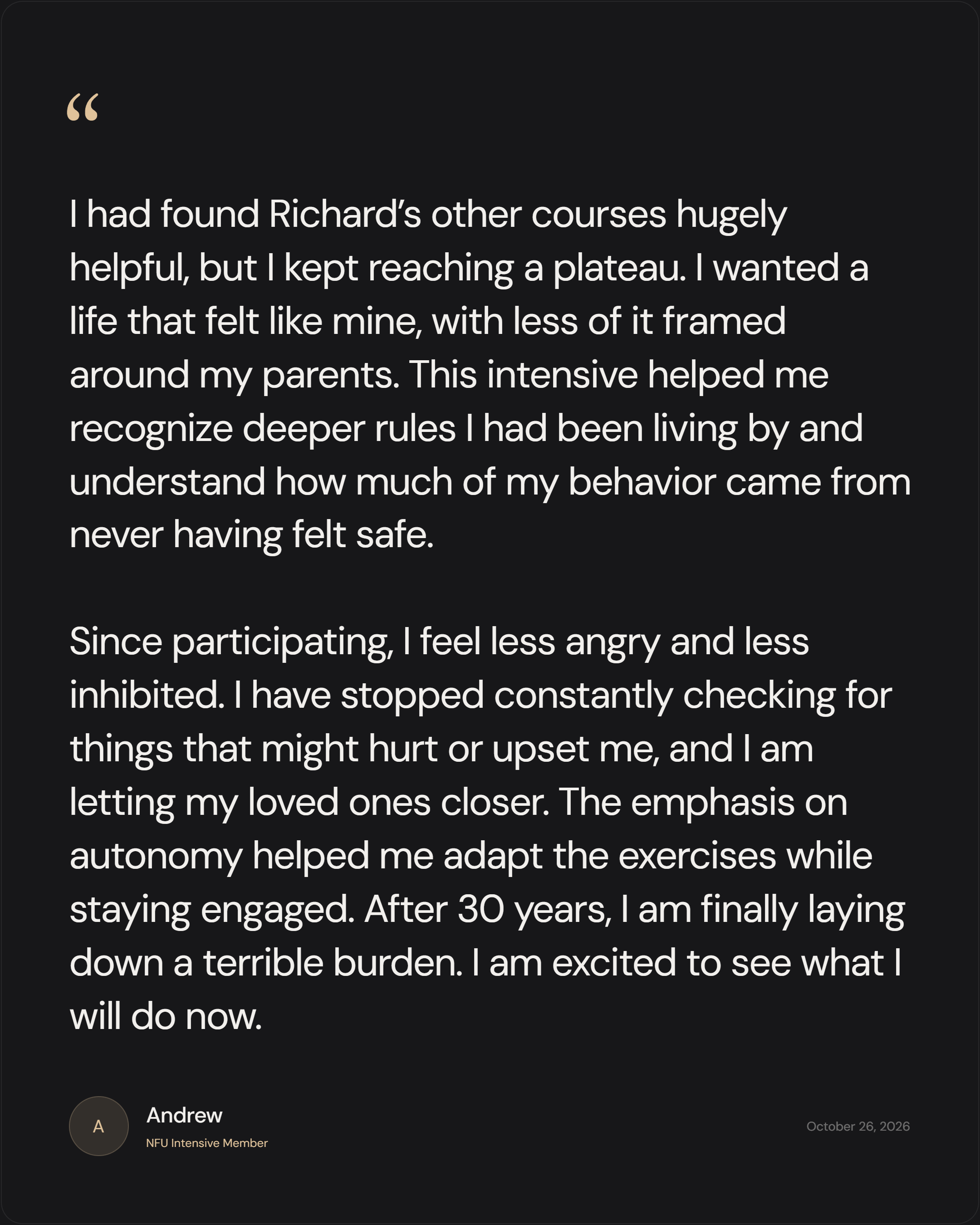
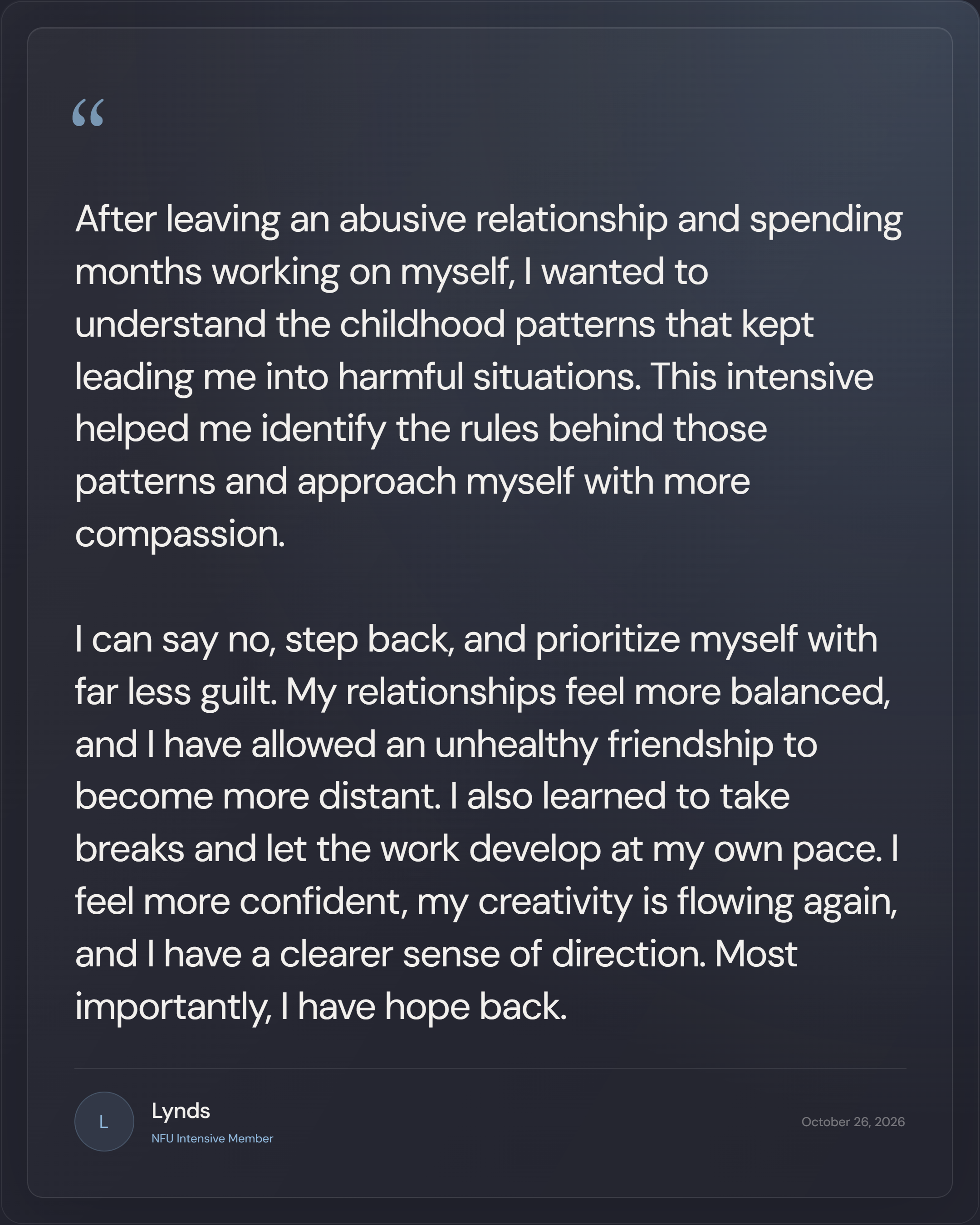
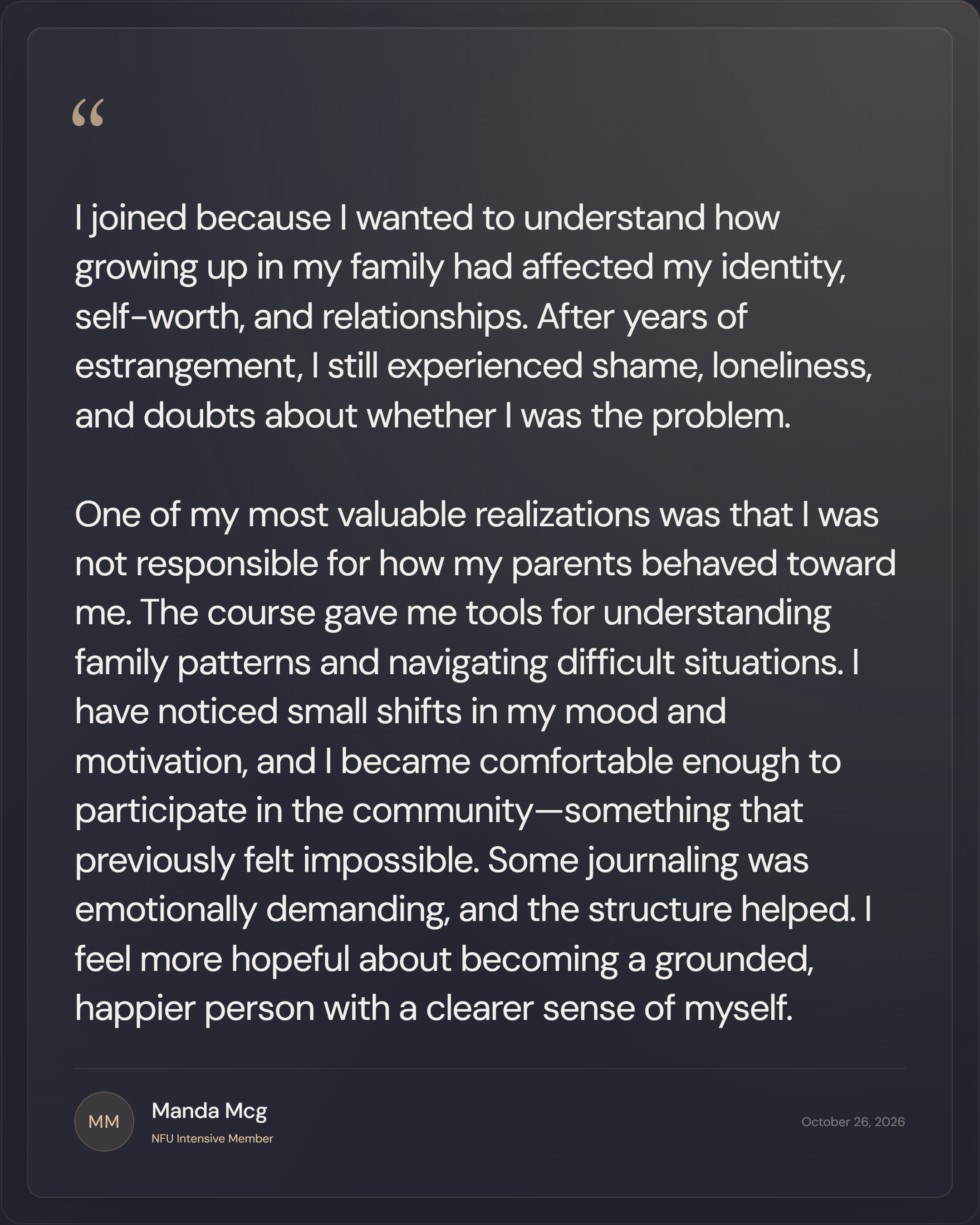
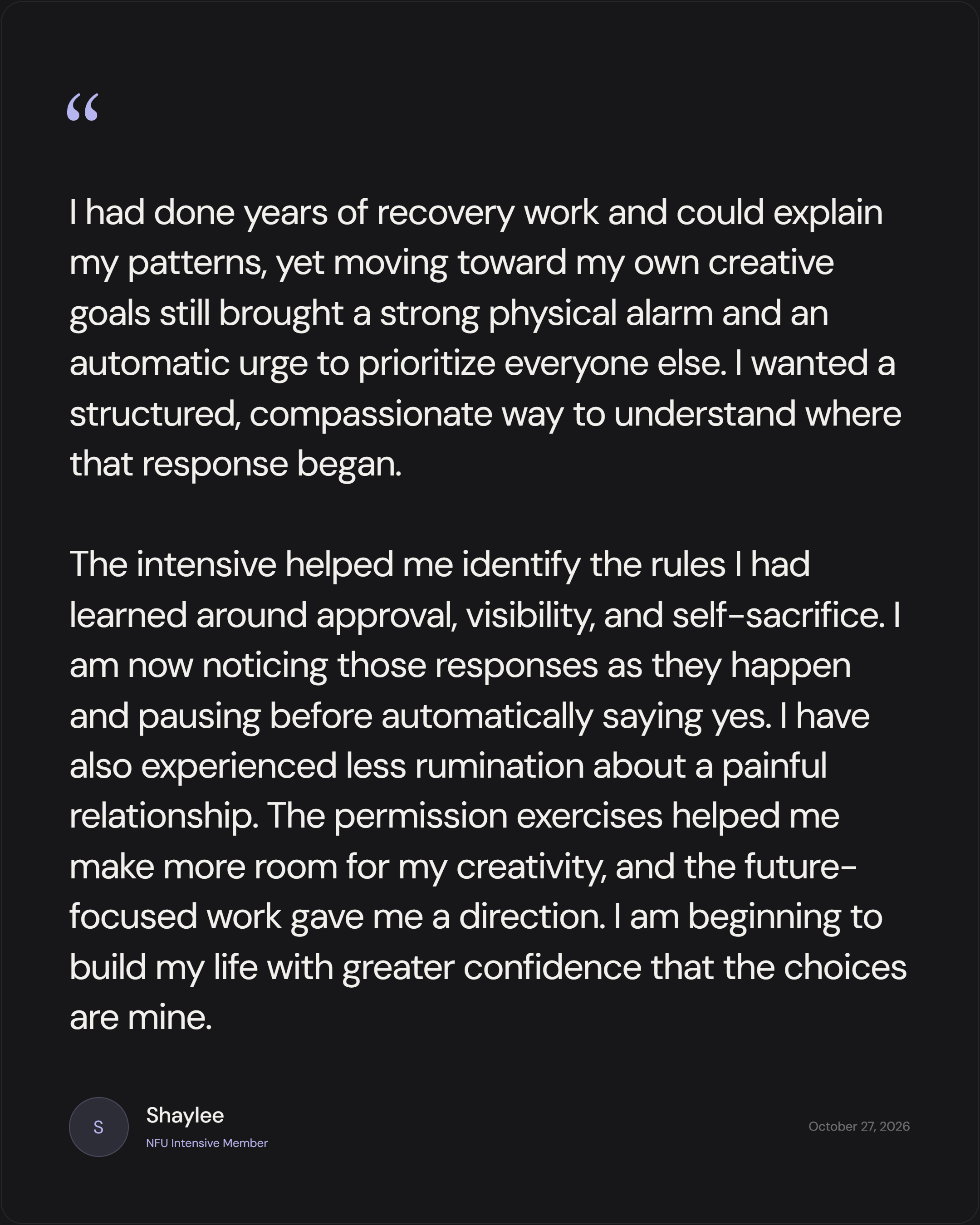
We thank the NFU Unblending Intensive participants whose engagement and thoughtful feedback helped shape this program. These testimonials bring together their reflections.
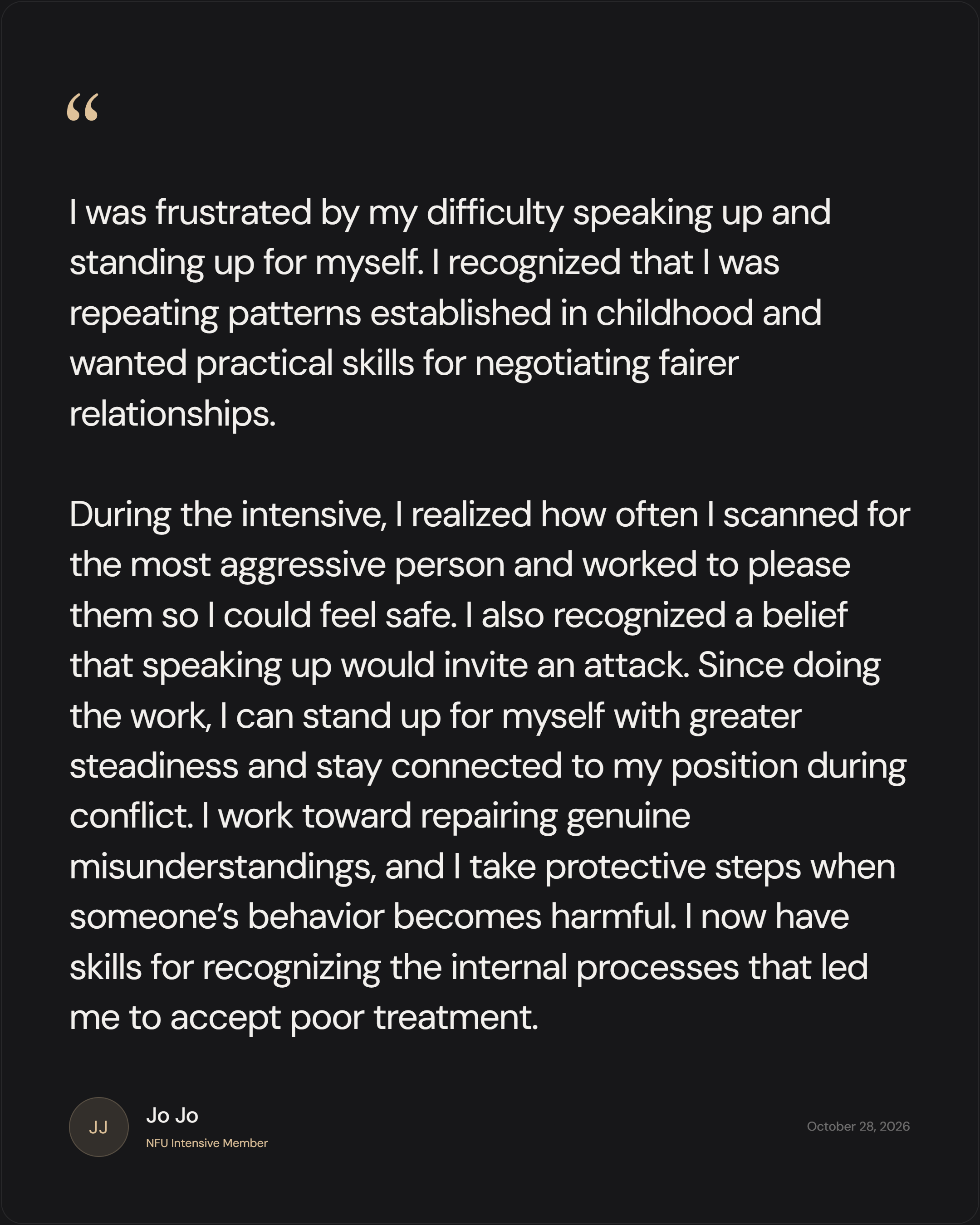
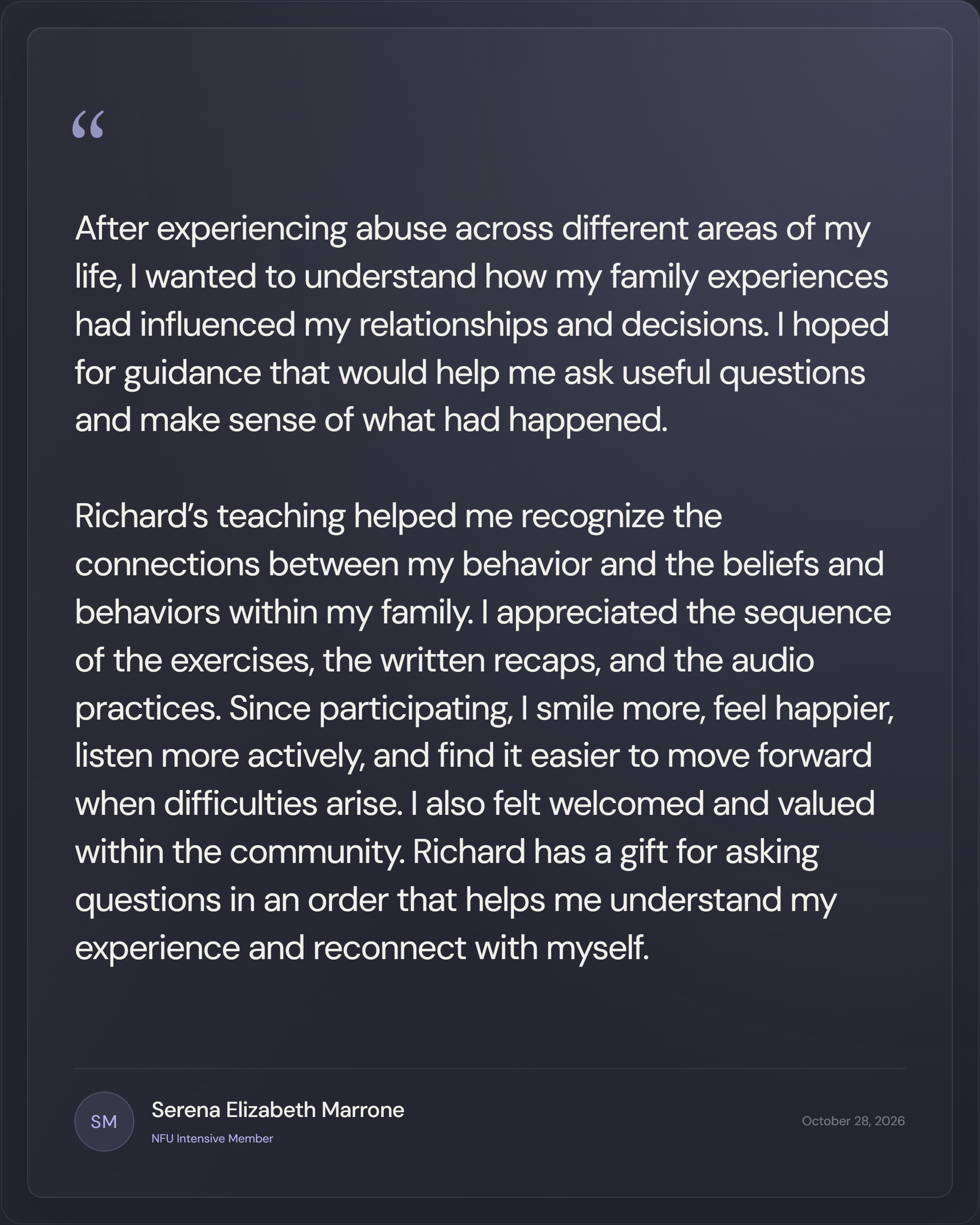
“I know I overgive. Why am I doing it again?” “I understand boundaries. Why can’t I speak up?” “Why do I feel guilty every time I choose something for myself?”
Several people who joined the intensive described having considerable insight while still feeling pulled into familiar responses. Some had reached a plateau. Others wanted to understand why their own goals, creativity, or independence felt so difficult to prioritize.
I want you to examine the conditions in which those responses developed. A child who depends on unpredictable or controlling adults may learn to monitor moods, avoid disagreement, hide preferences, or take responsibility for keeping everyone settled.
Those adaptations can become deeply familiar. In adulthood, a request, disagreement, or opportunity to be seen may activate an old expectation: “If I put myself first, I could lose connection.”
Understanding the protective purpose of a response gives you a more compassionate place to begin changing it.
Through eight modules, we explore your learned rules, family roles, recurring scripts, and self-story. You practice identifying these influences and writing permissions that make room for your present-day needs and choices.
Continually orienting around other people can leave little space to discover what you enjoy, what you value, or what you want to build. Peace may feel unfamiliar. Speaking up may feel risky. Rest may come with guilt.
Intensive participants came looking for a better understanding of their reactions, tools for difficult interactions, and a stronger sense of who they were. Their feedback also emphasized the importance of pacing, repetition, and time to practice new behaviors.
This course brings those themes into a structured process: recognize the pattern, understand its possible origins, identify the rule, and develop a permission you can approach.
Alongside that work, you explore everyday preferences, clarify your values, and choose small actions connected to the life you want.
It helps you recognize what is running the pattern.
Identify the family rules behind responses such as keeping the peace, over-explaining, hiding your preferences, or feeling responsible for someone else’s emotional state.
Journaling exercises help you connect your present experience with what you learned, giving you clearer language for patterns that previously felt confusing or automatic.
It gives you tools for the moment you feel pulled.
Practice the SRP drill: see the pattern, identify the rule, and translate it into permission. Use emotional literacy to name your experience and the reality-check exercise to examine difficult interactions.
Tactical grieving provides a structured way to approach manageable emotional material. You begin with minor adult experiences and adjust the pace to your capacity.
It helps you make space for a life of your own.
Reconnect with what you like, what matters to you, and what you want to protect. Write your personal Bill of Rights and explore the concerns that arise around greater independence or visibility.
The final exercises help you describe your preferred direction and take one small, safe step toward it. Repeated practice gives you opportunities to notice and support change.

00
DAYS
00
HOURS
00
MINUTES
00
SECONDS
Start today and spread the cost across 3 simple payments.
Explore the family rules, roles, and scripts influencing your adult life. Learn repeatable practices for emotional awareness, boundaries, self-compassion, and more considered choices.
Work through the course alongside opportunities for connection and shared reflection. Participants in the intensive valued the community as a source of support while engaging with emotionally demanding material. Includes full access to the complete course library.